Best Django Books (Beginner to Advanced) 2026 Edition
Discover the best Django books in 2026 for every skill level. From beginner-friendly introductions to project-based learning and advanced references, this guide highlights books updated for Django 5+ and 6 to help you master web development effective
Table of Contents
Article Details
- 4190 views
- Dec 22, 2025
- Category: Django Resources
- Topic: Books, Courses & Certifications
- Tags #django books #django 2026 #best django resources #django beginner to advanced #python web development
Why Read Django Books in 2026?
With Django evolving quickly, books remain one of the best ways to gain structured knowledge. Unlike scattered blog posts or short tutorials, a well-written book takes you step by step from fundamentals to advanced concepts in a clear, organized way. In 2026, the best Django books focus on modern practices, updated APIs, and Django 4+ and 5 features that reflect how real projects are built today.
- Perfect for beginners starting from scratch with Django.
- Helpful for intermediate learners who want structured, project-based knowledge.
- Essential for advanced developers polishing production-level skills.
- Books offer depth, context, and consistency that short tutorials often lack.
How We Picked These Books
Not every Django book is worth your time. Some are outdated, while others don't go beyond the basics. To make this list valuable, we focused on books that are up-to-date, practical, and trusted by the Django community.
- Updated editions - all books cover Django 4+ and 5 features.
- Hands-on learning with real projects, not just theory.
- Author credibility - written by experienced Django developers.
- Community feedback - books with positive reviews and recommendations.
Why You Should Avoid Outdated Django Books
Django is a fast-evolving framework, and older books can teach patterns that no longer work today. Many tutorials written for Django 1.x, 2.x, or even early 3.x rely on deprecated APIs, outdated security practices, or features that have been replaced.
- Deprecated code - examples may fail on modern Django versions.
- Security issues - old practices may ignore new security defaults.
- Missing features - async views, modern ORM, and Django 5 improvements won't be covered.
- That's why this list only includes books written or updated for Django 4+ and Django 5.
Best Django Books for Beginners

Django for Beginners: Build Websites with Python
A hands-on starter that guides you through building complete websites with models, views, templates, and auth. Clear explanations and project-first flow make it ideal for newcomers.
- Project-first learning with step-by-step builds.
- Covers core concepts: models, templates, forms, auth.
- Beginner friendly with minimal prerequisites.

Django for Beginners (5th Edition) - Modern Applications
A refreshed edition aligned with modern Django releases. Great if you want the most up-to-date beginner path with improved examples and current best practices.
- Updated examples tailored for recent Django versions.
- Polished walkthroughs of common app patterns.
- Good stepping stone before API or Pro-level books.

Django for the Impatient
A fast-track beginner option if you prefer minimal theory and quick wins. Learn by doing with concise explanations and a pragmatic approach to building features.
- Quick ramp-up to working Django apps.
- Straight-to-the-point coverage of essentials.
- Good for readers who learn best by shipping features.

Learning Django
Beginner friendly with an eye toward real-world setups. Balances fundamentals with practical deployment tips like containerization so you can move from local dev to production.
- Solid coverage of core Django concepts for starters.
- Touches on deployment concerns early on.
- Helps you think about production from day one.
Intermediate Django & Project-Based Books

Django for Professionals
A step up from beginner books, this title teaches you how to build production-ready websites. It covers security, performance, testing, and deployment strategies for real-world projects.
- Pros: Great coverage of production topics like security, scaling, and testing.
- Pros: Clear project structure and step-by-step progression.
- Cons: May feel fast-paced if you haven't finished a beginner Django book first.
- Cons: Limited coverage of advanced async features.

Django 5 By Example
A hands-on book where you build multiple applications step by step. Updated for Django 5, it's one of the most practical ways to deepen your knowledge after the basics.
- Pros: Up-to-date for Django 5 with real-world projects.
- Pros: Covers e-commerce, social features, and REST APIs.
- Cons: Requires solid Python skills before jumping in.
- Cons: Can feel long and overwhelming if you're brand new.

Django for APIs
Focused on Django REST Framework, this book is excellent if you want to build APIs with Django. It's practical, project-driven, and widely recommended for developers heading into backend/API development.
- Pros: Dedicated focus on Django REST Framework and API design.
- Pros: Project-based learning with clear examples and authentication coverage.
- Cons: Less coverage of front-end or full-stack integration.
- Cons: Not ideal if you only want to build traditional Django apps.
Advanced Django Books & Mastery

High Performance Django
This book focuses entirely on performance, scalability, and production operations. Perfect for devs running large apps or SaaS platforms.
- Pros: Strong focus on scaling, caching, and DB tuning.
- Pros: Covers deployment strategies and team workflows.
- Pros: Written by seasoned Django engineers with real-world experience.
- Pros: Still highly relevant despite not being tied to Django 5.
- Cons: Assumes strong Django background before reading.
- Cons: Some tooling examples are a bit dated.

Django Mastery
A comprehensive guide for experienced Django developers. It dives into async, modern ORM tricks, scalable architecture, and advanced API patterns.
- Pros: Fully updated for Django 4+ and Django 5.
- Pros: Covers async views, channels, and advanced ORM queries.
- Pros: Includes design patterns for scalable, maintainable apps.
- Pros: Ideal for senior devs wanting to level up architecture skills.
- Cons: Too advanced if you haven't built production apps before.

Django for APIs (Advanced Edition)
If APIs are your main focus, this advanced edition extends Django REST Framework usage with JWT, OAuth, testing, and complex API design.
- Pros: Strong coverage of advanced DRF features.
- Pros: Includes token-based auth, JWT, and security practices.
- Pros: Explains testing strategies for reliable API development.
- Pros: Project-based with modern use cases.
- Cons: Best suited if you already know Django and DRF basics.
Special Topics: Microservices & Cookbook

Hands-On Microservices with Django
For developers ready to push Django into cloud-native environments. Learn Docker, Kubernetes, CI/CD, and microservices architecture applied to Django apps.
- Pros: Focused on microservices, scaling, and DevOps workflows.
- Pros: Teaches containerization and Kubernetes deployments.
- Pros: Covers observability and CI/CD pipelines.
- Cons: Requires prior Django + Docker knowledge.
- Cons: Too advanced for beginners.
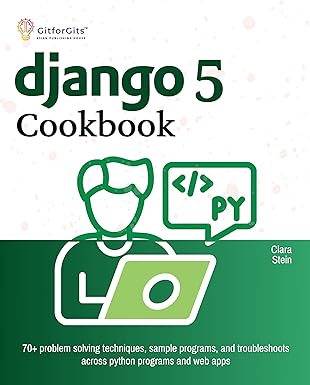
Django Cookbook
A recipe-style collection of Django solutions. Useful for quick lookups and practical fixes when you don't want to read a full tutorial.
- Pros: Easy-to-follow recipes for common problems.
- Pros: Broad coverage - ORM, templates, deployment, and more.
- Pros: A handy companion book alongside structured guides.
- Cons: Doesn't provide a structured learning path.
- Cons: Some recipes may feel surface-level for advanced devs.
Quick Comparison Table
Here's a quick side-by-side view of all the books. I grouped them by level so you can easily see where to begin and which one to pick next.
| Book | Level | Focus | Updated For | |
|---|---|---|---|---|
| Django for Beginners | Beginner | Foundations, projects | Django 4+ | |
| A smooth and project-first entry point if you're brand new to Django. | ||||
| Django for Beginners (5th Ed.) | Beginner | Modern beginner path | Django 4-5 | |
| Latest edition with updated examples - great if you want the freshest start. | ||||
| Django for the Impatient | Beginner | Quick builds | Django 4+ | |
| Pick this if you like fast results and minimal theory. | ||||
| Learning Django | Beginner | Core + deployment | Django 4+ | |
| Good choice if you want basics plus early exposure to deployment concepts. | ||||
| Django for Professionals | Intermediate | Production setups | Django 4+ | |
| Great next step after beginner books - teaches you to think production-ready. | ||||
| Django 5 By Example | Intermediate | Multi-app projects | Django 5 | |
| Perfect if you like building real-world apps such as e-commerce and social sites. | ||||
| Django for APIs | Intermediate | REST APIs, DRF | Django 4+ | |
| Best pick if your goal is to specialize in backend and API development. | ||||
| High Performance Django | Advanced | Scaling & ops, Concepts timeless | Django 4+ | |
| Recommended if you're serious about performance and large-scale apps. | ||||
| Django Mastery | Advanced | Async & architecture | Django 4-5 | |
| Great for senior devs wanting to explore advanced ORM, async, and architecture. | ||||
| Django for APIs (Advanced) | Advanced | Advanced DRF | Django 4+ | |
| If you're already comfortable with DRF, this book takes you to the next level. | ||||
| Hands-On Microservices with Django | Special | Cloud & microservices | Django 4+ | |
| Excellent for those curious about running Django in cloud-native setups. | ||||
| Django Cookbook | Special | Recipes & fixes | Django 4+ | |
| A handy desk reference when you just need quick, ready-to-use solutions. | ||||
My tip: start with a beginner book and actually finish it. Then move to Django 5 By Example or Django for Professionals. Once confident, go advanced or dive into APIs, scaling, or microservices depending on your career goals.
Conclusion
Django is one of those frameworks where you can keep learning for years. Whether you're just starting out or already deploying apps to production, the right book can speed up your progress and give you confidence in your skills.
- New to Django? Start with a beginner-friendly book like Django for Beginners or Learning Django.
- Already comfortable? Move into Django 5 By Example or Django for Professionals to build real projects.
- Want to specialize? Go advanced with Django Mastery, High Performance Django, or pick niche topics like APIs and microservices.
My suggestion: don't try to read them all at once. Pick one book that matches your current level, finish it, and then step up. Django is a journey - and with these books, you'll be well-equipped to move from beginner to expert.
👉 If you prefer a step-by-step guide instead of books, check out my full Django tutorial series - it's designed to complement these books and help you practice along the way.
Related Articles
Django Certification Guide 2026 Is It Worth It?
Curious about Django certification? Learn if there is an official option, where to get recognized certificates, and whether they truly help your career.